
Introduction
India’s quest for self-reliance in defense technology has gained significant momentum with the development of the Advanced Medium Combat Aircraft (AMCA), a next-generation stealth fighter jet designed to strengthen the Indian Air Force (IAF) and establish India as a major player in the global aerospace industry. Developed by the Aeronautical Development Agency (ADA) in collaboration with Hindustan Aeronautics Limited (HAL) and the Defence Research and Development Organisation (DRDO), AMCA represents India’s bold step into the realm of fifth-generation fighter aircraft technology.
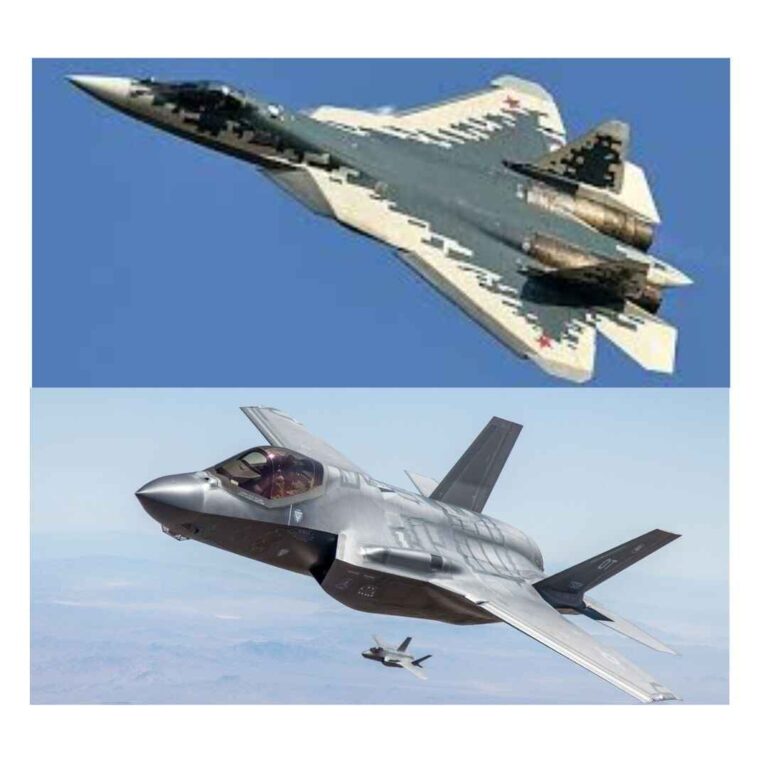
As a twin-engine, multi-role, all-weather combat aircraft, AMCA is engineered for superior performance across air superiority, deep strike, electronic warfare, and intelligence missions. The jet is expected to feature stealth technology, an internal weapons bay, supercruise capabilities, and advanced avionics, placing it in the same league as elite fighter jets like the F-35 Lightning II, J-20 Mighty Dragon, and Su-57 Felon.
With global air combat strategies rapidly evolving, the IAF faces the challenge of modernizing its fleet while reducing dependence on foreign aircraft acquisitions. The AMCA program aims to fill this gap by delivering a state-of-the-art indigenous fighter jet, ensuring technological self-sufficiency and strategic deterrence. Once operational, AMCA will not only replace aging aircraft like the Mirage 2000, MiG-29, and Jaguar but also serve as a force multiplier, enhancing India’s combat capabilities amid rising geopolitical tensions in the region.
Genesis of AMCA: The Need for a 5th-Gen Fighter Jet
The Advanced Medium Combat Aircraft (AMCA) project is a defining moment in India’s aerospace industry, marking the country’s bold transition into the realm of fifth-generation stealth fighter jets. Spearheaded by the Aeronautical Development Agency (ADA) under the Defence Research and Development Organisation (DRDO), in collaboration with Hindustan Aeronautics Limited (HAL), AMCA represents India’s commitment to achieving self-reliance in defense manufacturing under the ‘Aatmanirbhar Bharat’ initiative.
The development of AMCA has been shaped by India’s past experiences with fighter jet programs, global advancements in aerial warfare, and the Indian Air Force’s (IAF) evolving operational requirements. From conceptualization to prototype development, AMCA has undergone rigorous technological refinement, strategic modifications, and policy approvals to emerge as a state-of-the-art multirole combat aircraft.
India’s fighter jet fleet has long been a mix of imported and indigenous aircraft, including the Soviet-origin MiG-29, Su-30MKI, Mirage-2000, Jaguar, and the domestically built HAL Tejas. However, as global air combat strategies evolved with the advent of fifth-generation stealth fighters, it became evident that the Indian Air Force (IAF) needed a technologically advanced platform to counter potential adversaries like China’s J-20 Mighty Dragon and Pakistan’s JF-17 Thunder Block-III.
The realization for a homegrown fifth-generation fighter jet stemmed from:
- The limitations of fourth-generation aircraft in modern warfare, particularly against stealth-enabled adversaries.
- India’s withdrawal from the Russia-led Sukhoi/HAL Fifth Generation Fighter Aircraft (FGFA) program, citing concerns over technology transfer, cost, and long-term feasibility.
- The strategic necessity is to reduce dependence on foreign fighter jet acquisitions and create an indigenous aircraft manufacturing ecosystem.
By 2009, the AMCA project was officially conceptualized, and a feasibility study was initiated to define its operational requirements, design philosophy, and key technological features.
Design and Development
The initial design phase of AMCA was driven by a clear objective—to build a stealth-enabled, highly maneuverable, multirole combat aircraft capable of performing both air superiority and deep-strike missions.
The AMCA project saw a significant breakthrough in 2018, when ADA secured ₹447 crore (equivalent to ₹598 crore or US$68 million in 2023) for the Detailed Design Phase (DDP). However, by 2019, the program faced multiple delays, coinciding with India’s withdrawal from the Indo-Russian Fifth Generation Fighter Aircraft (FGFA) program, which was a separate project designed for a different weight category. Following India’s exit from FGFA, AMCA emerged as the IAF’s primary focus for a next-generation combat aircraft.
After facing continuous delays, India’s Ministry of Defence (MoD) sought approval from the Cabinet Committee on Security (CCS) for the prototype development phase. The initial timelines of the first flight by 2020 and production by 2025 were subsequently revised, pushing the expected rollout of the first prototype to 2026.
By March 2024, the CCS finally granted clearance for the ₹15,000 crore (US$1.7 billion) prototype development project. Under this phase:
- A total of five prototypes will be built.
- The first three prototypes will focus on developmental flight trials.
- The next two prototypes will be dedicated to weapon trials.
- Each prototype will be rolled out at an interval of 8-9 months.
- The first flight is anticipated by late 2028.
Additionally, ADA and HAL have proposed forming a Special Purpose Vehicle (SPV), involving a private company to facilitate AMCA’s development and production.
Design and Development Milestones
- 2010-2013: Preliminary design phase completed, focusing on an aerodynamically optimized stealth airframe, internal weapons bay, and supercruise capability.
- 2014-2018: Design refinements made based on inputs from IAF, resulting in a diamond-shaped stealth profile similar to the F-22 Raptor and J-20.
- 2019: Advanced wind tunnel tests confirmed AMCA’s aerodynamic efficiency and stealth properties
- 2021: The Government of India sanctioned ₹15,000 crore ($2 billion) for prototype development, leading to the initiation of AMCA’s first full-scale metal cutting.
- 2022-2023: HAL commenced the development of subassemblies and began integration of indigenous avionics, AESA radar, and digital fly-by-wire systems.
At Aero India 2025, the first full-scale engineering model of AMCA was publicly unveiled. ADA laid out a 10-year roadmap for the rollout of five prototypes, following the initiation of full-scale engineering development in April 2024. The key milestones include:
- Prototype rollout: Late 2026 or early 2027.
- First flight: 2028.
- Final certification: 2032.
- Induction into the IAF: 2034.
According to Krishna Rajendra Neeli, the Project Director of AMCA, each prototype will cost approximately ₹1,000 crore (US$110 million). Notably, the CCS has mandated that any cost overruns should be reported directly to CCS instead of the Defence Ministry, ensuring streamlined project oversight.
Features and Capabilities
Stealth & Low Observability
- Stealth shaping: Designed with radar-absorbent materials (RAM) and an angular airframe to reduce radar cross-section (RCS).
- Internal Weapons Bay (IWB): Ensures a low radar signature by carrying missiles and bombs internally.
- Diverterless Supersonic Inlet (DSI): Enhances stealth by eliminating radar-reflecting moving parts in the air intake.
Supercruise & High Maneuverability
- Supercruise capability: Expected to sustain supersonic speeds without afterburners, improving fuel efficiency.
- Thrust-vectoring engines: Provides superior agility in dogfights and close-combat scenarios.
- Aerodynamic design: Features all-moving tail fins and leading-edge vortex control for extreme maneuverability.
Advanced Avionics & Sensor Fusion
- Active Electronically Scanned Array (AESA) Radar: Provides high-resolution target detection and tracking.
- Electro-Optical/Infrared Search and Track (EO/IRST): Detects and engages stealth aircraft passively.
- Distributed Aperture System (DAS): Offers 360-degree situational awareness, missile warning, and night vision.
- Sensor fusion: Integrates data from multiple sensors, radars, and satellites for a real-time battlefield picture.
Electronic Warfare (EW) & Cyber Capabilities
- Next-generation EW suite: Jams enemy radars, disrupts communications, and counters electronic threats.
- Network-centric warfare: Can operate as part of an integrated air combat network with other aircraft and UAVs.
Weapon Systems & Combat Versatility
- Multirole capability: Can execute air superiority, ground strike, electronic warfare, and reconnaissance missions.
- Weapon loadout: Includes beyond-visual-range air-to-air missiles (BVRAAMs), short-range missiles, precision-guided bombs, and anti-radiation missiles.
- Hypersonic missile integration: Future capability to carry hypersonic cruise missiles for deep-strike missions.
Engine & Performance
- Indigenous engine development: Future variants will feature a 110 kN-class engine developed by DRDO in collaboration with Safran (France).
- Supercruise capability: Enables sustained supersonic speeds without afterburners.
- Combat range: Estimated range of 2,500 km with external fuel tanks or aerial refueling.
Open Architecture & Upgradability
- Modular avionics: Allows easy integration of new sensors and systems.
- AI-driven battlefield management: Expected to feature AI-assisted pilot decision-making for complex engagements.
AMCA Variants
AMCA Mk1 (5th Generation – Initial Variant)
- Engines: Equipped with two General Electric F414 engines (98 kN thrust each).
- Stealth Features: Partial stealth with some external weapon mounting.
- Avionics: Features AESA radar, AI-assisted combat systems, and advanced EW suite.
- Weapons Bay: Internal weapons bay (IWB) for stealth operations.
- Supercruise: Expected but limited due to engine constraints.
- Production Start: 2032 (expected).
AMCA Mk2 (5.5th Generation – Advanced Variant)
- Engines: Indigenous 110 kN-class engine (jointly developed by DRDO and Safran).
- Enhanced Stealth: Full stealth capability with more radar-absorbent materials (RAM).
- Upgraded Avionics: Incorporates AI-driven decision-making, improved sensor fusion, and enhanced EW capabilities.
- Weapons & Loadout: Ability to carry hypersonic missiles and directed-energy weapons (DEW) in the future.
- Super cruise: Fully operational with indigenous engines.
- Production Start: 2035 (expected).
AMCA Carrier-Based Variant (Naval Version – Future Consideration)
- Designed for: Operations from INS Vikrant and future INS Vishal aircraft carriers.
- Modifications: Strengthened landing gear, tail hook, and folded wings for carrier storage.
- Status: Concept stage, pending naval feasibility studies.
Production Roadmap & Timeline
Phase 1: Prototype & Initial Testing (2024–2030)
- 2024: AMCA Critical Design Review (CDR) completed.
- 2027: First prototype rollout by Hindustan Aeronautics Limited (HAL).
- 2028: First flight test of AMCA Mk1.
- 2027–2030: Extensive testing, including stealth verification, sensor integration, and weapons trials.
Phase 2: Limited Series Production (LSP) (2030–2035)
- 2032: AMCA Mk1 Limited Series Production begins with F414 engines.
- 2033: Initial squadron deployment with the Indian Air Force (IAF).
Phase 3: Full-Scale Production & Upgrades (2035–2040)
- 2035: AMCA Mk2 enters production with indigenous engines and full stealth.
- 2037: AMCA Mk1 units upgraded to Mk2 standard.
- 2040: Possible naval variant development decision.
Comparison: AMCA vs Global 5th-Generation Fighters
| Feature | AMCA (India) | F-35 Lightning II (USA) | F-22 Raptor (USA) | Su-57 Felon (Russia) | J-20 Mighty Dragon (China) |
| Generation | 5th (Mk1), 5.5th (Mk2) | 5th | 5th | 5th | 5th |
| Role | Multirole Stealth Fighter | Multirole Stealth Fighter | Air Superiority | Multirole | Air Superiority |
| Stealth | Observable (LO), RAM Coating, Internal Weapons Bay | Low Advanced LO design, RAM Coating, Internal Weapons Bay | Highly Stealthy, RAM Coating, Internal Weapons | Moderate Stealth, RAM Coating, Some External Weapons | High Stealth, RAM Coating, Internal Weapons Bay |
| Engine | Mk1: 2× GE F414 (98 kN each) Mk2: 2× Indigenous 110 kN | 1× P&W F135 (191 kN) | 2× P&W F119 (156 kN each) | 2× Saturn AL-41F1 (147 kN each) | 2× WS-15 (160-180 kN each) |
| Super cruise | Limited (Mk1), Full (Mk2) | No | Yes | Yes | Claimed, but unverified |
| Max Speed | Mach 1.8+ | Mach 1.6 | Mach 2.25 | Mach 2.0 | Mach 2.0+ |
| Combat Range | 1,800+ km | 1,200 km (internal fuel) | 3,000 km (ferry range) | 1,500 km | 2,700 km (ferry range) |
| Thrust Vectoring | Planned (Mk2) | No | Yes (2D TVC) | Yes (3D TVC) | No/Unknown |
| Weapons Bay | Internal + Optional External Hardpoints | Internal + External (stealth mode reduces payload) | Fully Internal | Internal + External | Internal + External |
| Avionics & AI | AI-Enabled Cockpit, Sensor Fusion, AESA Radar, Electronic Warfare (EW) | Sensor Fusion, AESA Radar, Advanced AI Combat Assist | AESA Radar, Sensor Fusion, Advanced EW | AESA Radar, EW, Limited AI | AESA Radar, Sensor Fusion, AI-Driven Combat |
| Weapons | Astra Mk3, Hypersonic Missiles (Future), DEWs (Future) | AMRAAM, Meteor, JDAM, Laser Weapons (Future) | AMRAAM, AIM-9X, JDAM, SDB | R-77, R-37M, Kinzhal (Hypersonic) | PL-15, PL-10, PL-X Hypersonic |
| Cost Per Unit | $100–120 million (est.) | $80–100 million | $150 million (Discontinued) | $70–80 million | $110–120 million |
Conclusion
India’s Advanced Medium Combat Aircraft (AMCA) represents a significant step forward in the country’s pursuit of self-reliance in defense manufacturing and aerospace innovation. As a fifth-generation stealth fighter jet, AMCA is expected to provide the Indian Air Force (IAF) with superior combat capabilities, including stealth, supercruise, advanced avionics, and network-centric warfare capabilities.
While the project faces technological and developmental challenges, including engine development, indigenous component sourcing, and funding, India’s growing defense-industrial base and government initiatives like Atmanirbhar Bharat drive its progress. The AMCA program not only strengthens India’s air defense capabilities but also positions the country as a potential exporter of advanced fighter jets, contributing to its global defense footprint.